Class recommendations

Recently I’ve had quite a few different people asking me about where to start with graphic novels or what they should look at for their class. In a bid to help with this and not be limited by characters on Twitter here are some of my recommendations based on what has been successful in my school and my classes over the past three years during which I’ve taught years 3/4 , 5 and 6.

The essentials

All of these have been a huge success and serve as the perfect place to start if you want to start improving your selection of graphic novels.

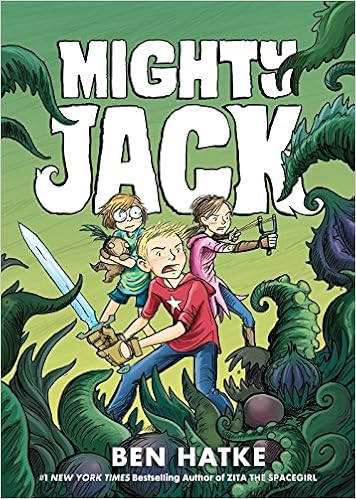
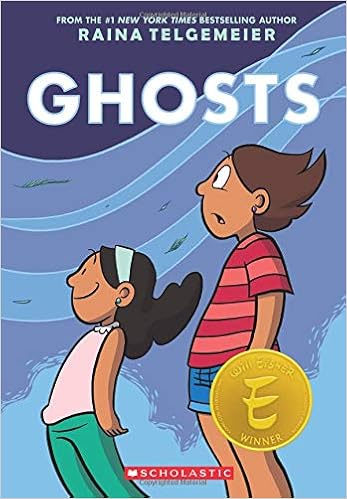
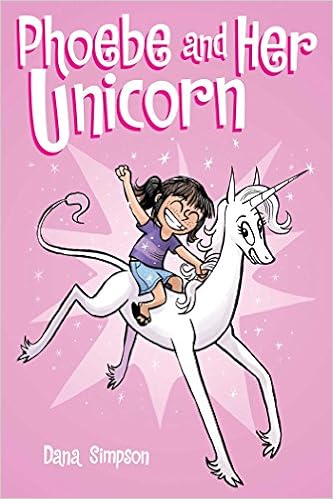
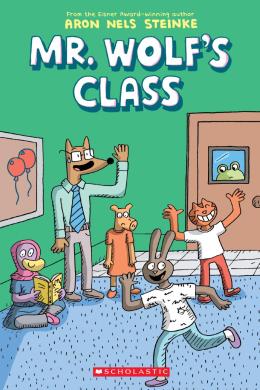
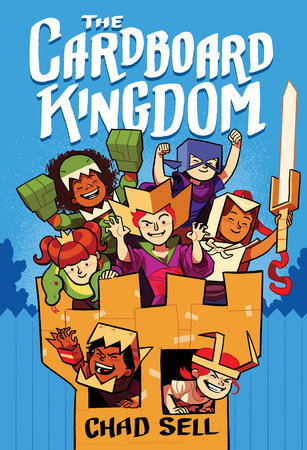
Image result for smile raina telgemeierImage result for amulet book oneImage result for mighty jackImage result for rollergirlImage result for cardboard kingdomImage result for ghosts raina telgemeierImage result for phoebe and her unicornImage result for mr wolfs class

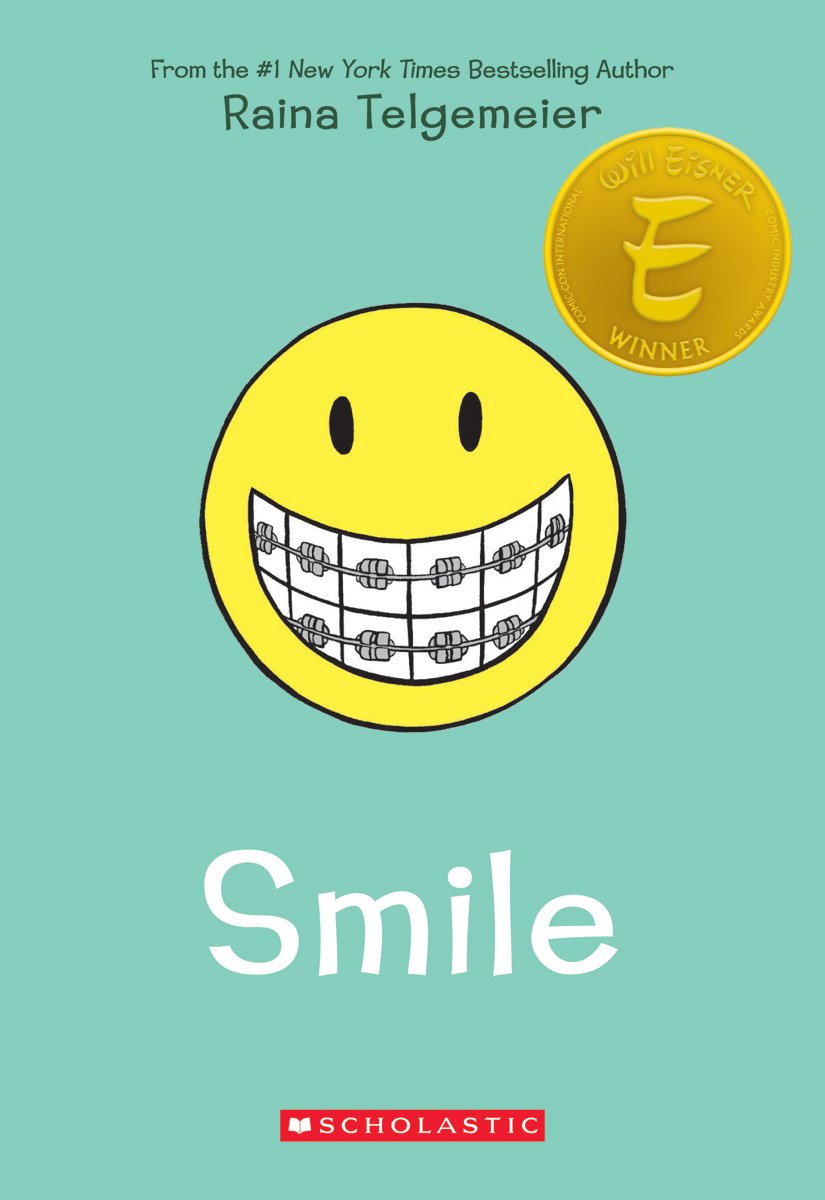
I cannot recommend these books enough and they all get read continuously in my classes. Anything by Raina Telgemeier is always hugely successful with pupils and Amulet often has a list of people waiting to read the next volume.

Worthy additions

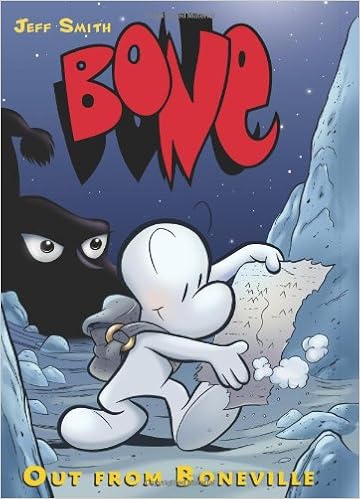
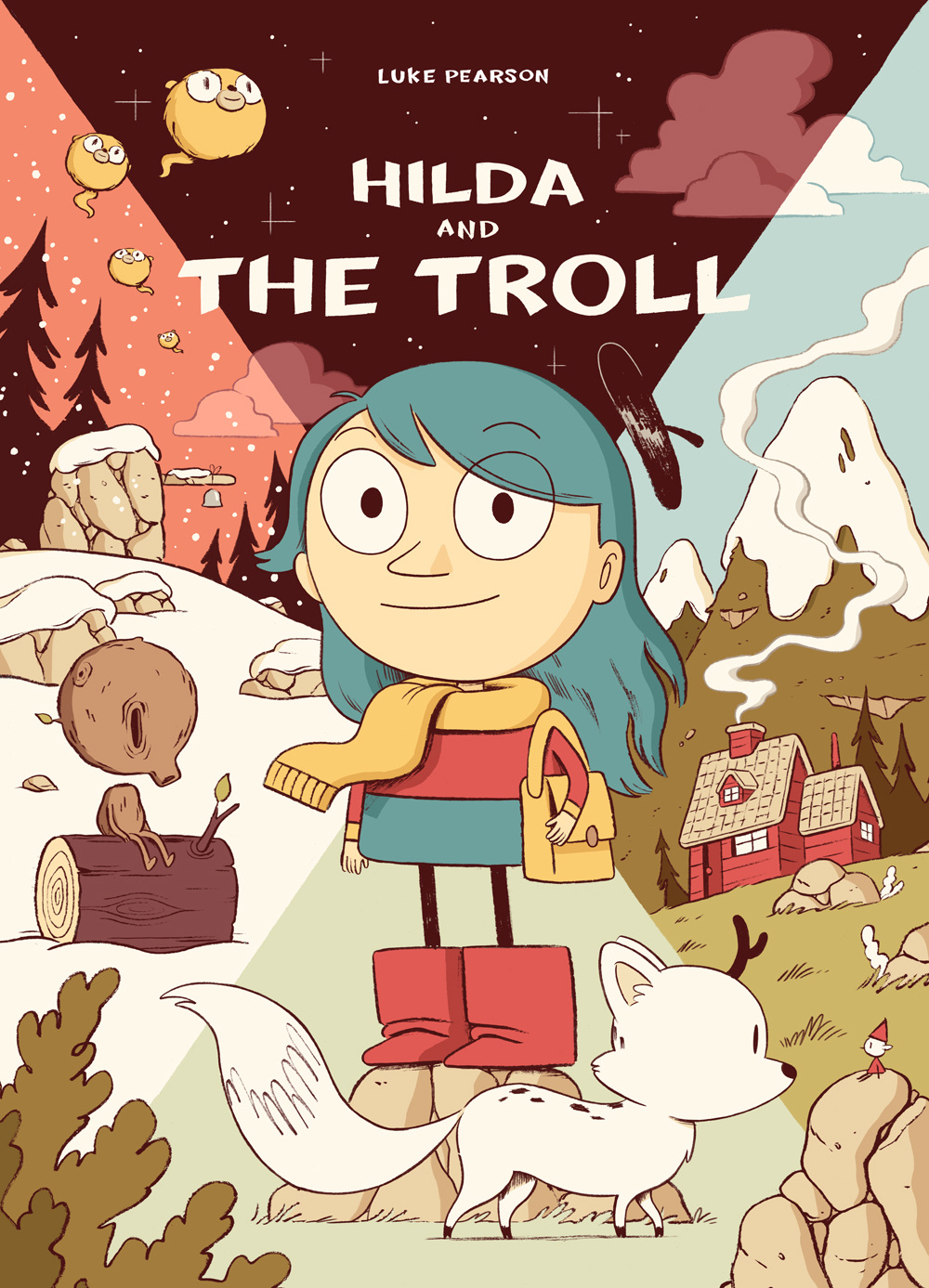
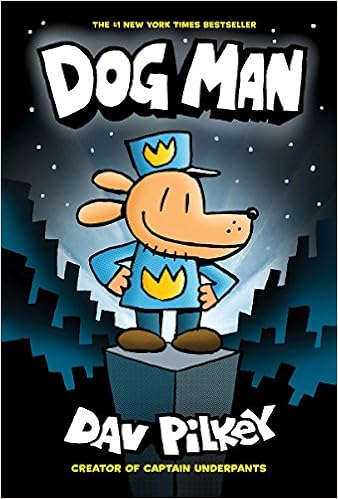
These texts are all worthy additions to a class library but may not be as universally loved in a class like the ones above. You often a group of friends may enjoy them or fans of specific genres/ artistic style.

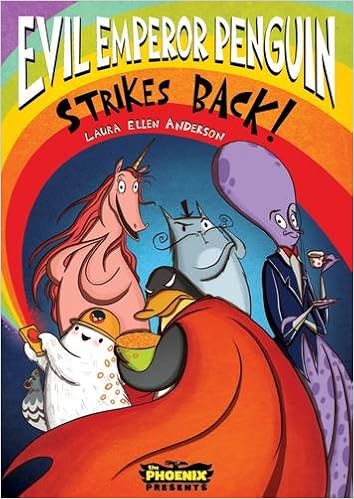
Image result for bone jeff smithImage result for hilda and the trollImage result for dogman dav pilkeyImage result for evil emperor penguin strikes back

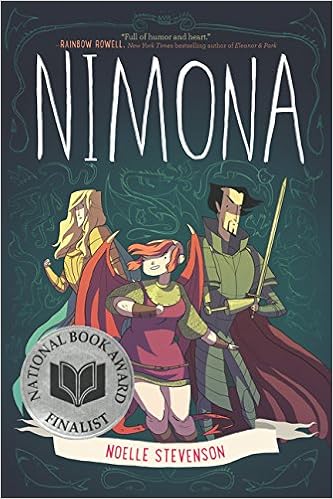
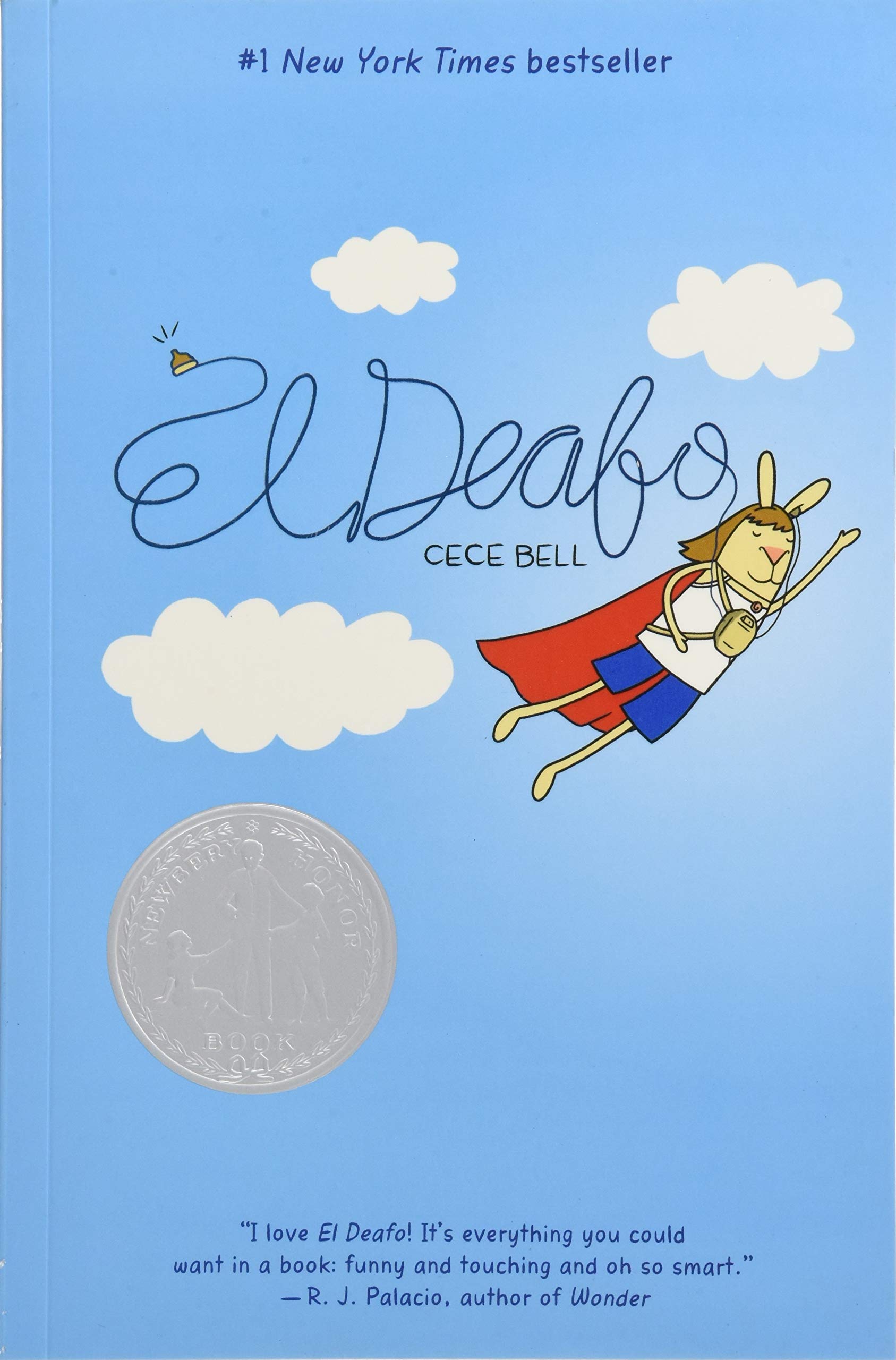
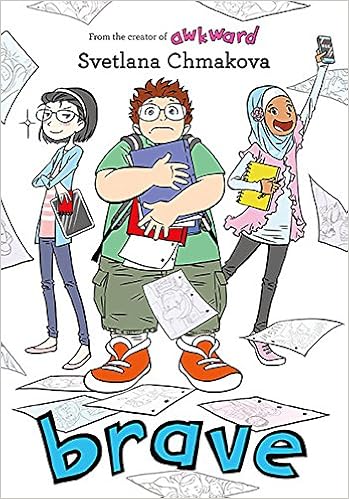
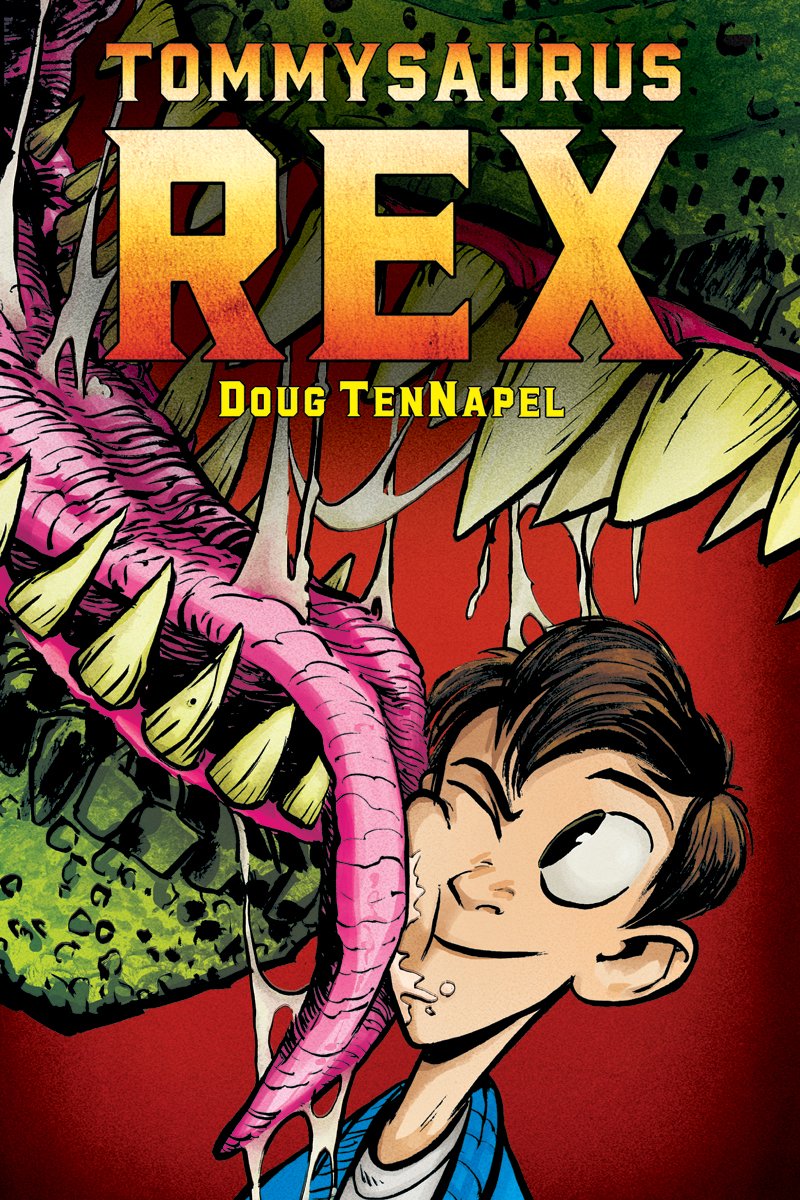
Image result for nimonaImage result for el deafoImage result for Brave (graphic novel)Image result for tommysaurus rex

Most of these are suitable for all of KS2 but teachers in 3 and 4 should be wary that Nimona and Brave may be a touch too mature for the majority of their readers and are more of a 5/6 text.

Niche texts

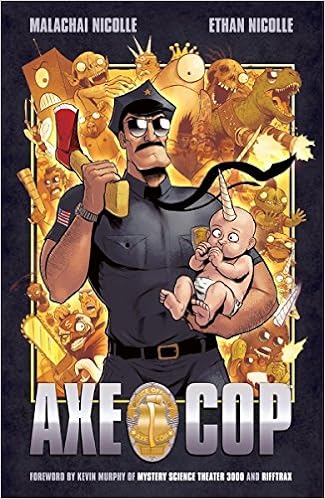
The books below are all fantastic texts but I have found them to appeal to limited amounts of pupils often due to their specific genres or very different approach. Axe Cop for example was hugely popular with my year 4 boys but most of the girls in the class told me it was weird and they didn’t like how odd it was. However if you already have a well established library these are good texts to add some diversity with or to appeal to a certain demographic in your class.

Image result for axe copImage result for animus (book)Image result for one trick pony graphicImage result for scales and scoundrelsImage result for isola graphic novelImage result for royden lepp rust

All of the books shown in this post are superb and obviously there will be plenty I have missed as well. This guide is just supposed to give a starting point and some guidance to what can be a daunting format of text. Other texts that deserve an honourable mention and may be perfect for your class are below:

Alex Rider series

Ghostopolis

Drama

Baby-sitters club

Hilo

Geiss

Lumberjanes

John Blake

Artemis Fowl

I hope this is useful for those who read it and if anyone wants to speak to me more about it or tell me about all the absolute must haves I have forgotten to mention then feel free to moan at me on Twitter!

Developing details in writing

Recently we have been trying to develop the level of detail in writing across year 6. Currently they struggle to manage more than a paragraph before lapsing into a rushed story that finishes quicker than the setting description at the start. To help them improve this we looked at writing a short description of a picture and then getting them to write what happened 10 seconds before it and 10 seconds after it, 10 minutes before, 10 minutes after and so on. Although not always a realistic option it really helped to show how much they were guilty of ignoring in their writing along with allowing some to show just how well they could do it. In a bid to make the most of this I attempted a lesson on Friday using three different comic extracts and a simple premise. Choose the story you would like to continue the most and do so. Now obviously I didn’t just want them to carry on a story, I emphasised how I wanted to see lots of details, description and depth to their writing rather than the inevitable rushed ending and party to celebrate (you all know the one where the whole town comes to celebrate and if necessary they get married!) I also removed the 10 second, 10 minute premise but all pupils agreed that following that slower approach would help them to improve the detail and description in their work.

img_5522.jpgOne of the three story prompts on offer. (The City of Ember)

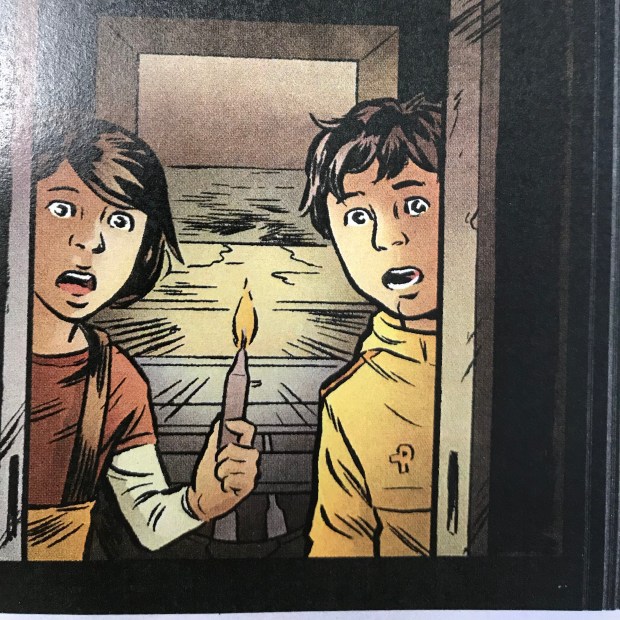
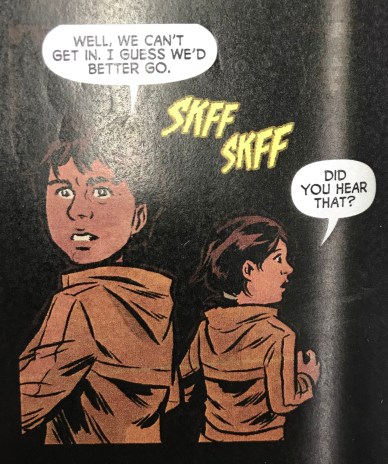
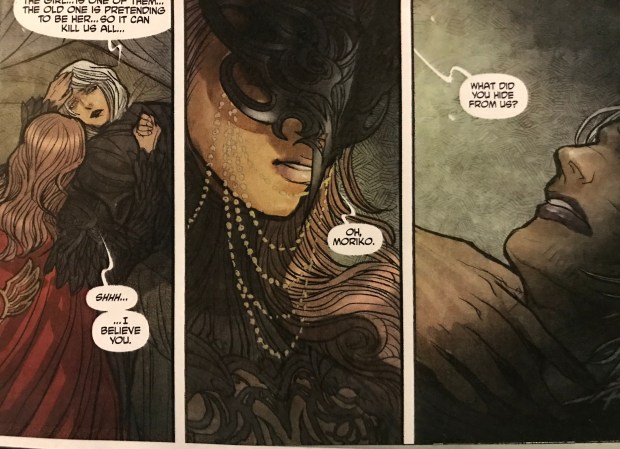
I chose three extracts that would offer different challenges including one from the book Monstress (definitely not primary suitable) which was the most difficult to continue writing but posed a nice challenge for the more ambitious writers on the day. The other two extracts were from The City of Ember (see above and below) and contained nice open page endings that could continue in a multitude of different ways. One big mistake I made was giving them the whole page of text instead of just the final panel which seemed too distracting for many or even led to them describing the page rather than the next events, in future use I will only give them the bare minimum of material to ensure greater focus. This issue aside the texts offered a large scope and the class seemed enthused about having the choice of story that suited their tastes best. All three texts were used by multiple people but the page finishing with “Did you hear that?” was easily the favourite, especially with less confident writers.

img_5521.jpg

Like always success was mixed and some people more than rose to the occasion while others floundered in a sea of distractions (not helped by being the last day of term!) However there was still plenty to gain from the activity and I look forward to repeating it in the future with some different texts and the adaptations I suggested above. Some pupils seemed to focus on the events leading up to these pages more than the next events but in some circumstances they did it very well. Most importantly a more patient approach was displayed in the majority of writing and a desire to use a wider range of vocabulary was evident. Below are some examples of writing that really embodied the tasks intent, showed patience and displayed wider vocabulary.

img_5525.jpgAn extract from Monstress that was very carefully selected due to the books graphic nature and heavy profanity making it unsuitable for primary as a whole text. Well worth reading though for personal enjoyment.

“Their footsteps echoed through the endless corridor.”

“Someone was in the room, a shadow appeared on the wall and it wasn’t human at all.”

“Slowly the candle light lit up the grand beasts face peeping from the darkness which revealed a huge wolf covered in gold chains and jewelry with dry blood slathered over its body.”

“The two stood there paralysed by the sight in front of them, their eyes filled with endless horror.”

“Slowly a dark figure emerged from the shadows.”

“Slowly they walked, eager to leave.”

“A slight cough was formed from the woman suffering on the uneven floor, struggling to breathe and forcing herself to find oxygen in order to keep herself alive.”

These are the best extracts I could find and there were others who certainly didn’t reach these levels but it was pleasing to see that even with some finding the task difficult, there were those who managed to produce some engaging writing. Not all of the work above comes from the supposed best writers in the class as well, several students who often struggle to produce quality descriptive work really rose to the occasion whilst several who often flourish failed to reach their usual heights.

Nobrow Press & Flying Eye Books

This week I had the pleasure of speaking to Sam Arthur who is the CEO/Co-founder of Nobrow Press/Flying Eye Books. As a publisher they are responsible for creating a range of visually stunning texts that span a range of genres and ages. Together Nobrow and Flying Eye are producing a stunning range of texts and helping to ignite the imagination of readers. Recently Netflix have noticed the beauty of their work and created a series based around the Hilda books which have been delighting readers over the past few years, especially in my year 3/4 class last year who were obsessed with the series. After seeing the popularity of the series and an announcement about series 2 being commissioned by Netflix, I was interested to speak to someone in the company about their philosophy and ethos towards the importance of visual texts, along with finding out their opinions on those people who view these type of books as inferior reading material.


Why do you as a publisher choose to specialise in graphic/visual texts?

I think I’ve always thought in pictures so for me that became a natural way to create stories. When we first started Nobrow 10 years ago, there were not many publishers specialising in graphic narratives, so my business partner and I saw it as a niche that might be an interesting business.

Some people including many parents consider comics, graphic novels and picture books to be only for little kids or they don’t even consider them reading (including a parent in my class!) What would be your response to people that are so against visual texts and often try to steer their children towards a ‘proper book’?

I have run up against the same attitude even from one of my son’s teachers! I find it astonishing! Reading is reading – if your child only likes reading the ingredients of food packaging or the football league tables I would encourage them to do it more. Reading anything and learning to enjoy doing it only leads to children reading more widely. Reading comics and graphic narratives is a different experience from reading a novel but just because you enjoy one of those things it doesn’t mean you cannot enjoy the other. They are not mutually exclusive! Comics are a great way to introduce reluctant readers to reading for pleasure. Also I would say that the within comics there is a huge range of genres and subject matter, those people that band them together as one ‘type’ are no different to those that think reading is boring!

As a company you have managed to publish lively and engaging work especially in the non-fiction genre which can struggle to be engaging and creative at times. What is the most important aspect you look for in an author when they bring you an idea? How do you ensure that the people you work with bring their work to life in a way that informs and engages?

We look for authors and artists that are passionate and inquisitive in the work that they do. We want to work with people that are striving for the best outcome.

Your books are always noticeably printed and produced in a high quality manner, does your company strive to make sure their publications are the highest quality they can be instead of prioritising quantity of work? If so what makes the quality over quantity motto so important to you?

We are definitely all about quality over quantity. Having said that we believe that every book is different, so we simply try to make each project the best that it can be.

Do you have any upcoming projects on the horizon that you are particularly excited about or looking forward to releasing soon?

I’m really excited about lots of things! In Waves is a debut graphic novel by Aj Dungo – it’s about love, loss and surfing and it will break your heart. Akissi: Tales of Mischief, (by Margeurite Abouet and Mathieu Sapin) is full of the funniest comics I’ve read for ages and it also has some great talking points for school readers and classroom studies. Tyna of the Lake by Alexander Utkin is an action packed instalment of the Gamayan Tales series and I love the artwork… I could keep going, but the best thing to do is take a look at our website – I’m excited about everything we publish!


Speaking to Sam and others involved in the company was an enlightening experience. As a company you can tell they really care about their audience and all they want is to make sure that readers receive the very best product they can. Anyone who has read or seen a book published by the company will know that this passion and care transfers onto the page as well. The quality of the books they produce and the way that they engage readers is consistently superb, which is why they are becoming a force to be reckoned with in the literary world. If you haven’t had the pleasure of interacting with a Nobrow/Flying Eye book then don’t hesitate to explore their vast catalogue.  It’s full of gems that will help enhance any library, home or classroom instantaneously. I can’t recommend their work enough especially if you want to liven up your non-fiction collection. To view their work or simply find out more about them as a company visit their website (also visually engaging!) or follow them on twitter using the details below:

https://nobrow.net/                      https://flyingeyebooks.com/

@NobrowPress                          @FlyingEyeBooks
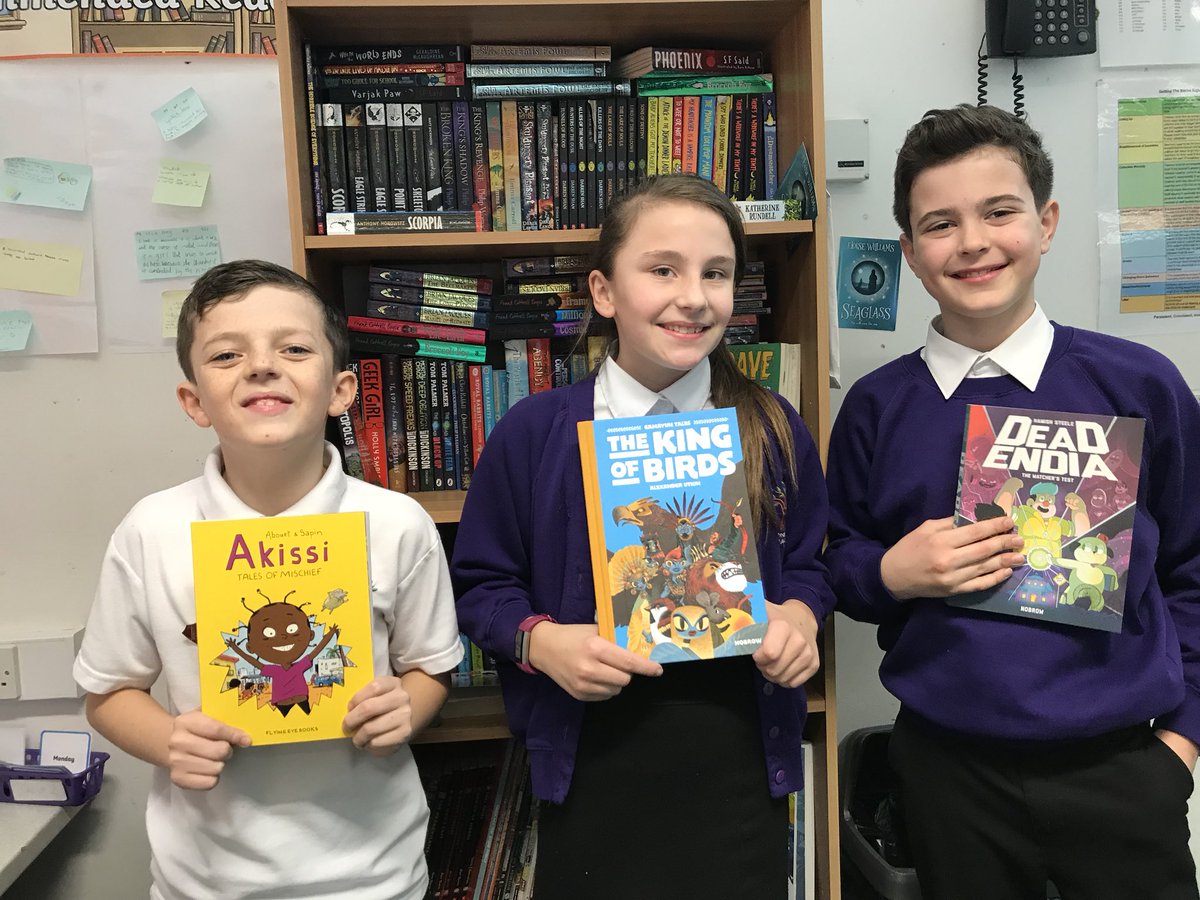
Three very happy children with some of the most exciting books available in the Nobrow/Flying Eye catalogue.
 

Are super heroes responsible?

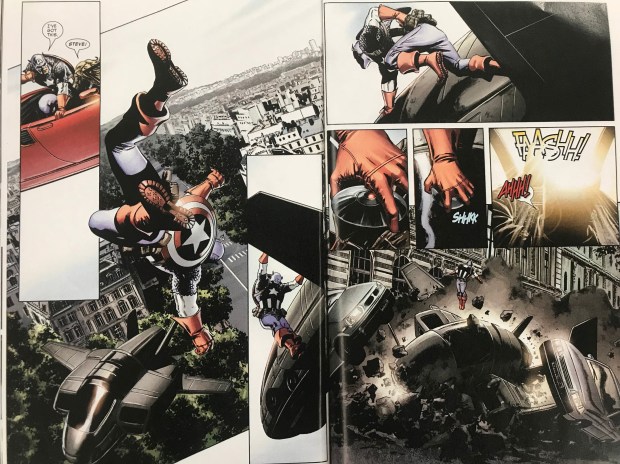
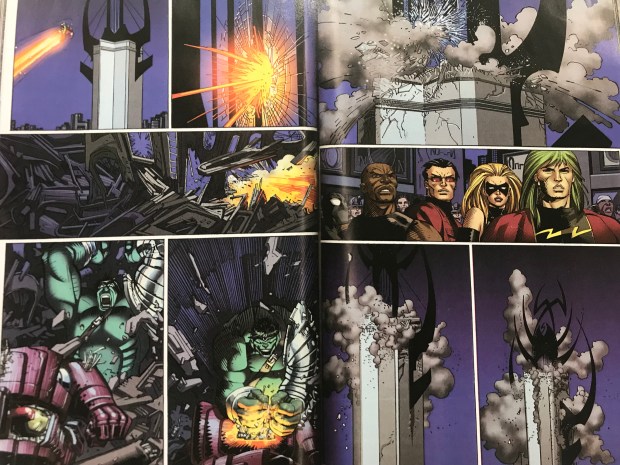
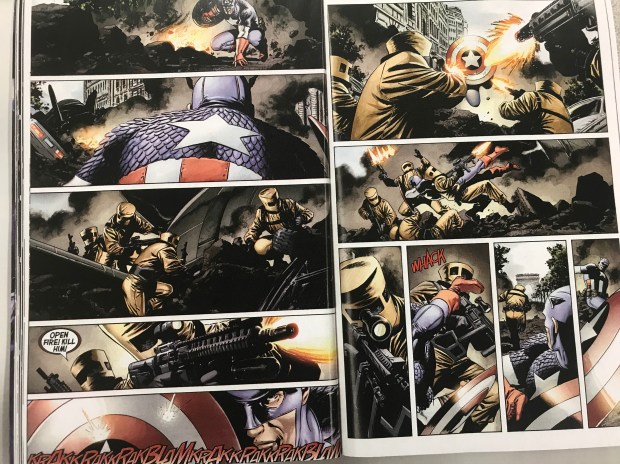
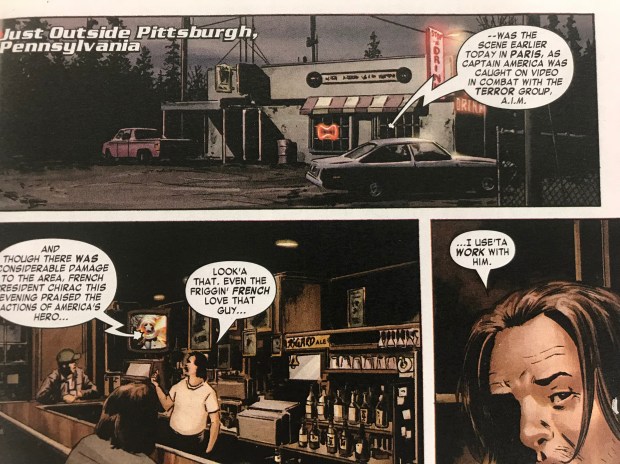
Our spring term started on Thursday this week which left me with two days of English to play with before starting a new unit next week. I decided to do some comparison work between two different comics. It started as partner work and whole class discussion before becoming a written task in their books on the second day. The two texts being compared were World War Hulk and Captain America: Winter Soldier. I used intentionally divisive pages which see the heroes in combat almost constantly but this inevitably leads to unintentional destruction as well. My aim was to focus in on ethical choices and whether heroes were guilty of sometimes doing more harm than good but getting away with it because of their heroic status.

img_5371.jpg

To start the task I asked the children to write down the qualities of a hero in pairs before discussing their ideas together. Eventually we came to the conclusion that the main way you can be heroic is to help others whilst inconveniencing yourself. The idea of self sacrifice is often great in super hero stories but I did my best to dissuade my class from going out and risking their lives!

After narrowing in on this specific aspect of heroism each pair was given both text extracts and asked to read through them before discussing what was going on in them. Identifying the events was quite simple which made sure the questions I then posed would be easier to explore, a more complicated set of events may have left some unable to engage correctly. Each question was asked separately and then the children were given two minutes in their pairs to discuss them before collecting our ideas as a class. The class discussion was my primary focus to start off with as I wanted to make sure the answers given had been fully thought out and rationalised. In order to do this I had to offer the opposing view on multiple occasions so that an answer could be fully explained.

The three questions posed were:

Are the heroes being responsible or irresponsible?

Are they being ethical?

Should they be punished or praised for their actions?

img_5370.jpg

These questions overlapped at times which enabled me to make sure the discussion was as thorough as possible. A heavy portion of our focus was drawn to the Captain America panels because the class was happy to condemn the Hulk and Iron Man to making selfish, irresponsible choices in their struggle with each other. When writing up their answers one child summed up the actions of Iron Man and Hulk brilliantly ” They are both irresponsible as they are classified as heroes, they should be stopping mayhem rather than causing it.” Whilst another student explained how they were neglecting their duties as heroes ” They aren’t saving people or helping the community.” The whole class agreed the two heroes were in the wrong and the damage they were causing could hurt or even kill people, damage property and make it impossible to travel in the city.

img_5372.jpg

Applying such a one sided view to Captain America was not possible. In the extract given readers see Captain America saving Paris from a terrorist attack but also causing huge damage to the area and risking civilians lives and properties whilst not showing any awareness of his surroundings. This disregard led to a rift in the discussion with most of the class unable to decide if he chose to save Paris in the safest way he could. Some felt he should have let the plane he exploded fly out of the built up area, others thought he had no choice and was only trying to help but the most common problem was trying to judge if his actions were warranted or reckless. Morals and ethics came heavily into the debate and in the end when taking a vote 11/16 pupils felt he had crossed the line and was behaving in a way that would lead to heroes being considered troublesome and unwanted in the future. The other 5 voters felt he had no choice “His dream was to save people and he did even though it made a mess,” and that his actions still saved more people and property than it damaged so it was a worthwhile risk or even a necessary one. One pupil was able to use the text to justify everything that happened by explaining ” The French government said what he done was right,” which demonstrated good use of the text to justify his point.

img_5373.jpg

Although the task was successful and led to some excellent debating between students and even myself, I would approach the task slightly differently in the future. I think the extract from World War Hulk was too one sided, the lack of a noticeable villain meant pupils were happy to class them as irresponsible incredibly quickly. Next time I would try to use a more balanced extract similar to the Captain America one where you need to really hone in on whether the positives outweigh the negatives and question the ethical choices of the character. Comparing the texts was a good discussion opportunity but on reflection I chose one of the texts poorly and would definitely change it for future use.

Text mapping with World War Hulk

Today was one of the most enjoyable English lessons I have taught in a long while but it was nothing to do with hours of preparation or some form of genius idea from myself, all credit must go to Dr Wayne Tennent and the recent training of his I have been fortunate enough to participate in. Over the past few months my school has hosted several reading training sessions with the primary focus looking at different ways you can teach comprehension. I personally have found the training incredibly inspirational and the impact it has had on my teaching has been easy to see. The work has looked at how we can get more from comprehension sessions without children having to fill out pages of questions or providing books full of unnecessary evidence just to prove that you can teach. In the last training session we looked at the idea of text mapping and it struck me as a brilliant idea that would help improve my teaching immensely but also immediately.

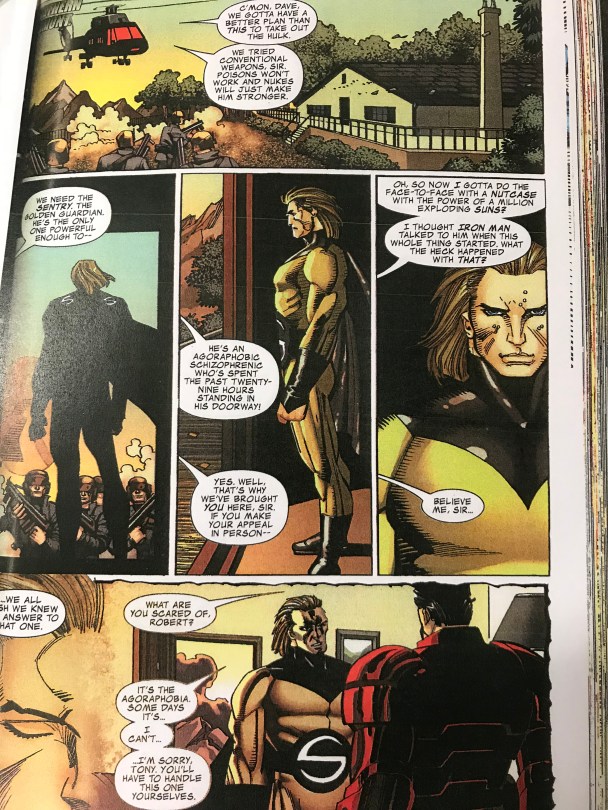
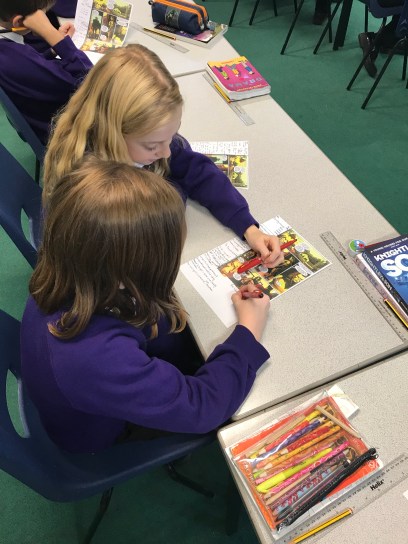
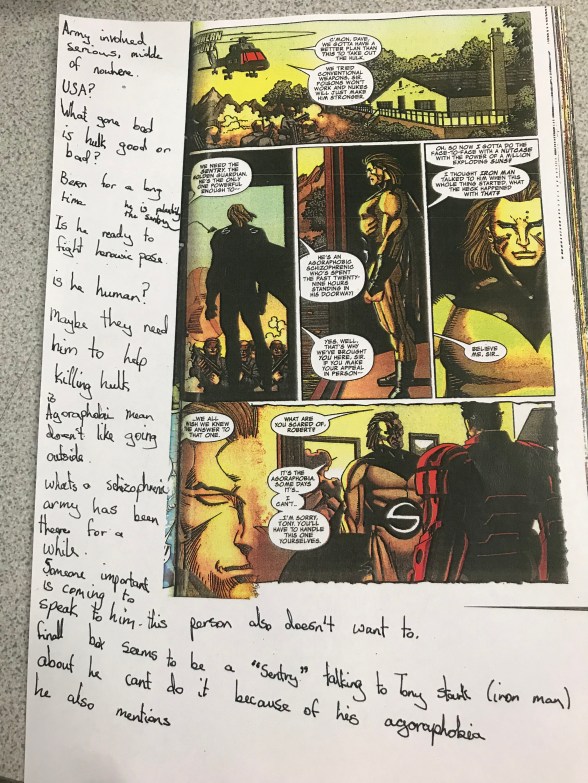
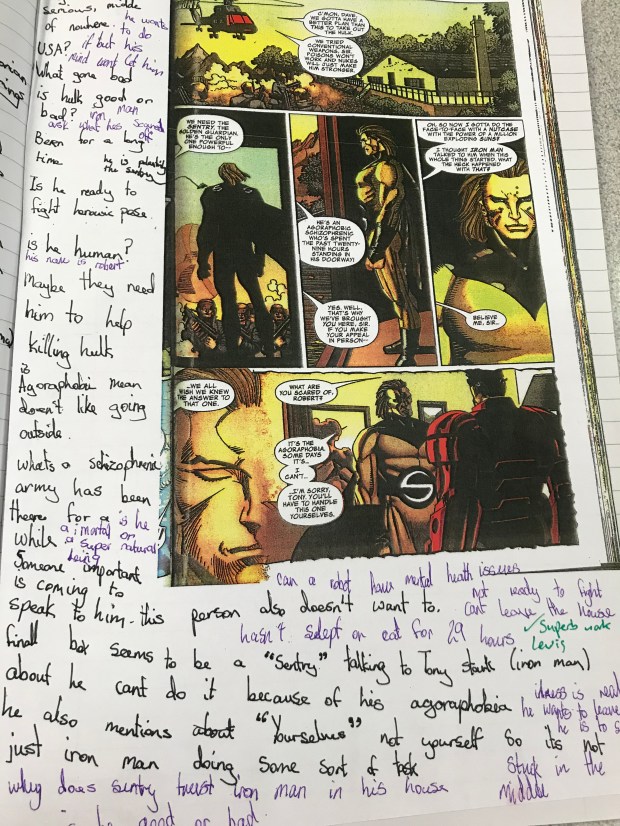
The process involves looking at a piece of text or image and noting down the different thoughts that come into your head as you go. These notes can be questions that are answered later or remain unanswered, simple observations, predictions, background knowledge or even just a reminder to yourself. We decided in year six that we wanted to try this as soon as possible and get into the habit of utilizing it. Originally the idea was to work with the text Gorilla by Anthony Browne but while I was reading last night I came across a page in World War Hulk that seemed perfect for the task. I debated whether to take the risk and try text mapping with something I hadn’t fully prepared for but I couldn’t shake the idea that it was ideal for what I wanted to achieve and I would regret it if I didn’t take a risk by trying it.

IMG_5258

The page is set towards the end of the book when Earth realises that it must convince the schizophrenic and agoraphobic Sentry to come to the rescue before the Hulk destroys everything. I was struck by the idea of a savior who couldn’t leave the house and the rich discussion we could have about this issue. As this was the classes first attempt at such a task I worked through half of the page with them and modeled how to approach the task by voicing my thoughts out loud and explaining what to note down by the side of the text. Initially I was preparing for a long exploration into the word agoraphobic and how we could use the text information to help us work out what it meant only for several children to already know and dash my big plan! However this gave us a good chance to explore the text in order to make sure we were correct and by looking at the image of him trapped in the doorway we ascertained that our initial thoughts were correct.

IMG_5251

After this I let the children work in pairs and gave them time to carry on annotating the text whilst I did the same myself. After everyone was satisfied that they had written down everything they wanted to we discussed our thoughts as a class. Normally you would do this with a group but due to my class being fairly small I was able to get away with a whole class approach for today. Whilst discussing our thoughts together we wrote down any new ideas we had in a different colour (purple) to show that these were from further discussions. Our discussion led us to answer some of our earlier questions so we made sure that these answers were written down to demonstrate how our earlier thoughts were related to later findings. This whole group discussion raised some fascinating insights from the children who had perceived some of the text differently to me. Ordinarily people would see this as a bad thing but I was delighted as it gave us a chance to have the best conversation I have ever engaged with this year, full of rich vocabulary that I wasn’t aware some of them possessed. Topics ranged from the idea that Sentry could be a robot, was the Hulk a hero and whether it was possible for robots to suffer from mental afflictions such as agoraphobia.

IMG_5255

To finish the lesson I posed one final question to the class which I knew would divide opinion and lead to the discussion I was most interested in. I asked them if they felt Sentry was selfish for not helping out and refusing to leave his house. Initially many of the class were quick to judge and several said he had to be “Because he only cares about himself,” and that “he might be self conscious,” and more concerned with “protecting himself.” Eventually the discussion came round to whether he truly had a choice in the matter and one child summed up the problem perfectly by explaining that “He clearly wants to go and help but his mind won’t let him do it.” All of a sudden children started to change their minds and explore the idea that he may not be in control of this choice whereas initially the suggestion was that Sentry was only looking out for himself. Although some still felt he should be able to conquer his fear in order to save Earth they had started to look at the other side of the argument and were able to appreciate that he may not be the self obsessed character they suspected he was. Finishing with this question allowed the children to use the information they had collected during the text mapping and apply it to their point of view which has been a weakness previously in the year. Hearing more detailed explanations from children who can struggle to express themselves was truly inspiring and left me feeling motivated for the rest of the day. Below is a finished text map from one of the students who extracted everything he possibly could from the task, although the layout is a little chaotic I would much rather have that instead of a beautiful looking sheet that has barely any ideas on it.

IMG_5256

Newspaper reports

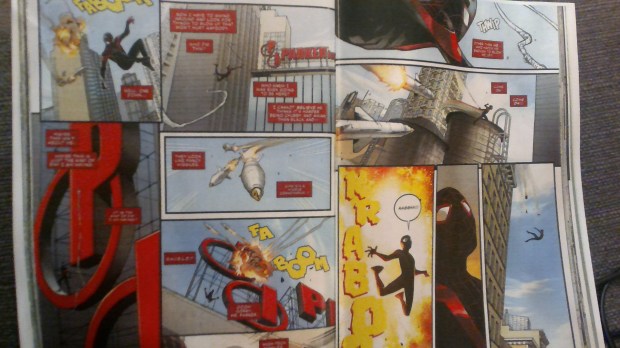
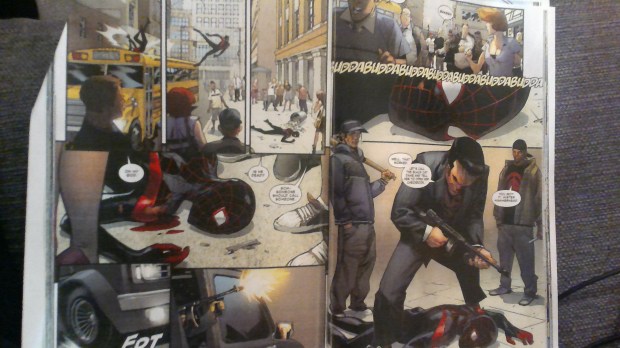
This week we were creating newspaper reports as the final part of our Captain Scott topic. My class had finished them by Thursday but I wasn’t 100% satisfied with their work and felt many of them had settled for less than their best so I used Friday as a chance to further develop their skills. I decided to approach the lesson in a way that I had never attempted before with a book I hadn’t actually got round to reading yet (what could possibly go wrong?) After searching through my shelves I decided to use the  Spiderman: Miles Morales book in which Spiderman (who is now an Afro-Latino teenager named Miles Morales has taken over the role from Peter Parker) finds himself being captured by mobsters after being chased by several highly powered missiles. I used this part of the story because it had lots of potential witnesses who could provide a quote, there was lots of little details that they needed to include or reference and it left the reader in a state of uncertainty over what would happen next, this would ensure they wrote a report that left people wanting to know more and therefore would force them to read the next days news.

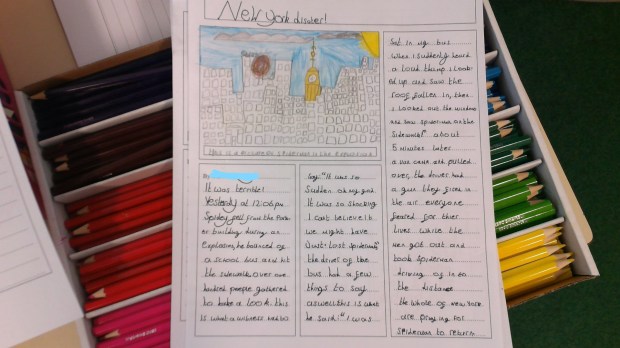
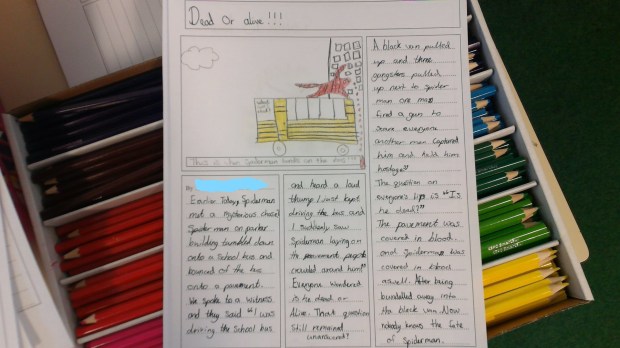
WIN_20181104_19_11_47_ProWIN_20181104_19_12_14_Pro To start the lesson the class worked in pairs so they could establish what had happened in the panels before we created a timeline together on the whiteboard. After agreeing on what events had transpired and who might have witnessed them we discussed how the report would not be able to answer certain questions which meant we needed to inform the reader as much as possible whilst also alluding to the potential outcomes from the day. Following this discussion the class were given time to work collaboratively on what they were going to include in their report before individually writing a draft in their  English jotter books. Each member of the class received verbal feedback about what they could improve in their report along with having their areas of strength highlighted to them. After receiving their feedback the children wrote up their report on a blank newspaper template, making sure they developed their areas for improvement as much as they could. The quality of their writing was noticeably better than their rough drafts but more importantly it showed a clear improvement from the reports they completed earlier in the week on Captain Scott.
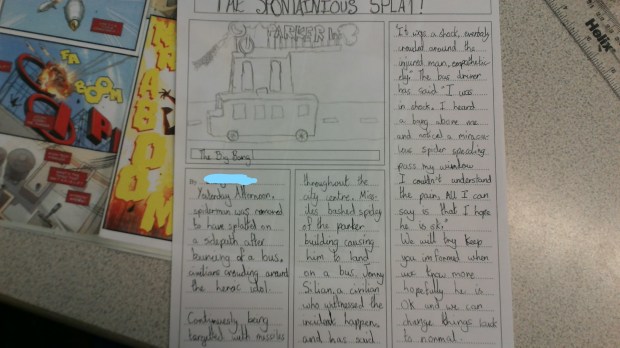
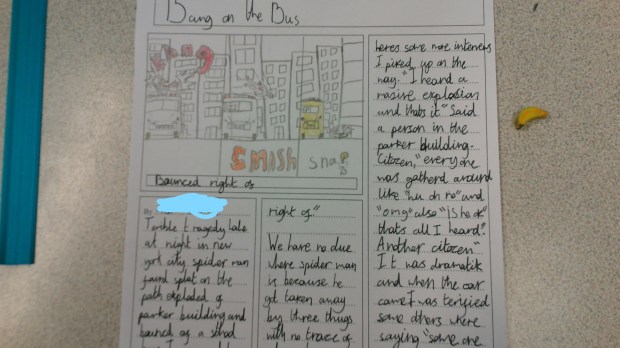
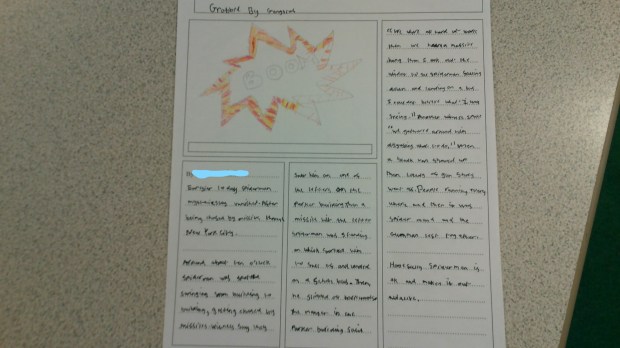
Several children who often struggle to find motivation in English lessons commented on how enjoyable they had found the task which they felt had led to them producing their best work. Overall the visual stimulus seemed to have helped them express their ideas and the class in general agreed that it was one of their favourite writing tasks this year which inevitably led to them creating better work. Below are some examples of the work produced by the end of the lesson, some aren’t quite fully finished but their writing was which was the focus of the task. Although I anticipated the task would be an enjoyable way to approach newspaper reports I didn’t realise quite how engaging the class would find it. Their positive reaction was uplifting to see and means I will definitely look to approach this unit in a similar way in the future.

WIN_20181102_13_28_12_Pro_LIWIN_20181102_13_28_29_Pro_LIWIN_20181102_13_28_48_Pro_LIWIN_20181102_13_29_13_Pro_LIWIN_20181102_13_29_35_Pro_LI

Diary entries

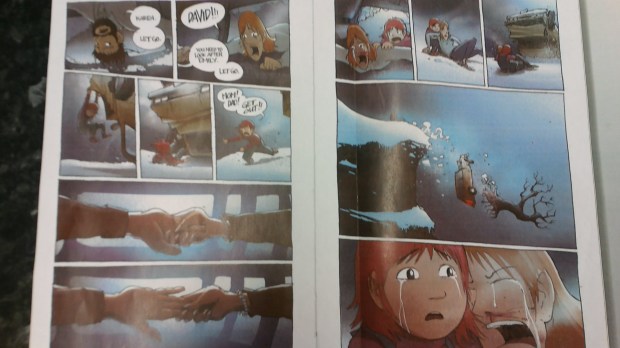
This week in our English lessons we have been creating diary entries based on the race to the South Pole back in 1911. I noticed some of the class were struggling to identify or express the emotions the explorers would have felt effectively whilst writing their second diary extract. In a bid to improve their emotive writing and develop the depth of their vocabulary we tried using a two page spread from Amulet to prompt our writing.  Each child was given a photocopy of page 10 and 11 from Amulet: The Stonekeeper. They examined the pages with a partner whilst discussing what was happening and how the characters involved may feel.

WIN_20181012_14_44_58_Pro

Following their discussions we looked at expressing emotions as a class with a particular focus on being more creative with our description, rather than just saying something simple such as ‘I feel devastated’ or ‘Everyone is upset.’ These phrases  were common in the work produced earlier in the week which is why it was important to look at the level of description and emotion provided in their work.

In a bid to focus on quality rather than quantity I suggested to the class that they try and aim for no more than 12 lines in their book. Although this was only a rough guide it was important to make them understand that success wasn’t related to the size of their diary entry, it was all about the content.

Once the tricky first line was out of the way the whole class worked incredibly hard to ensure their language and vocabulary was the very best it could be. Words such as ‘cascading’ and ‘immense’ worked their way into sentences without adult prompting, followed by others creating vivid phrases to describe the despair shown on the page. Soon everyone in the class was working methodically to create the most powerful and atmospheric writing they could rather than settling for the first word that sprung to mind. Below are some examples of this:

” My voice is empty and I don’t have anything to say”

“My life is a roller coaster of horror that only goes down and never comes up again”

“I am a puzzle, never to be finished, my dad is the last piece, lost forever”

“I want to stand up against the devastation but it keeps beating me down”

“I’m waiting for that moment he will walk round the corner. But he never will…”

“It feels like I’m cascading down into a black hole, my heart feels like it can’t beat any longer”

“The immense pain flowing through my body like an electric shock”

Previous to this task many children in the class would have struggled to create such atmospheric descriptions.  By using a visual prompt that displays so clearly how a character feels about a situation they were able to empathise and put themselves in her position with ease. This helped them to create more powerful writing and more importantly they enjoyed the writing process involved as well which was equally as fulfilling for me to witness.

Empathy and friendship

This week I finally managed to get my hands on a copy of El Deafo by Cece Bell and very quickly I could understand why it was so highly recommended. The story completely dragged me in to the extent where it left me no option but to make sure I finished it that day. Whilst reading it I felt a huge desire to share it with my class in a way that would really stimulate their thoughts about how we treat each other especially those who we may perceive to be ‘different’. I decided to photocopy two pages of the book which covered the idea of the qualities needed for a good friend, why we shouldn’t judge others for appearing ‘different’ to us and the pressure to care about what others think even if you don’t interact with them. The class came up with lots of excellent ideas about why we shouldn’t be so preoccupied with what others think whilst acknowledging that people are concerned about this because not everyone is treated fairly especially if they are ‘different’ in some way themselves. After a fantastic thirty minutes of dialogue about how we should treat everybody the same no matter how ‘different’ they may seem the children then set about making posters to promote empathy towards others in society. They made them together in pairs which allowed them to continue discussing ideas whilst working and really focus on the core principle that we shouldn’t be judging people just because something about them seems ‘different’ to us. I thoroughly recommend the text for those who haven’t read it yet as not only is it a brilliant book to read but the amount of PSHE work you can get out of it in UKS2 is phenomenal.

This slideshow requires JavaScript.

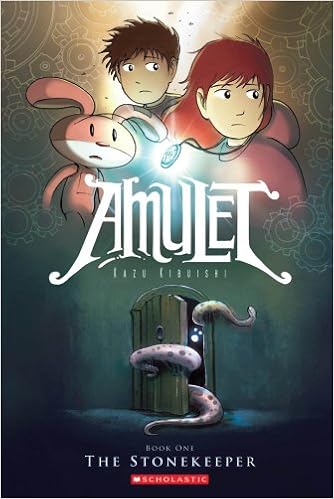
Amulet

Just a quick post to share the power of the Amulet series by Kazu Kibuishi. If you haven’t encountered this powerful series yet then I can’t recommend it enough especially for more reluctant readers at any age. From the emotional opening of book one readers are dragged into a world of mystery and wonder. It has easily been one of the most popular books in the whole of key stage 2 over the past two years in my school and just this week it has inspired one of the most anti-reading children I have ever met. She is already on book two and spent yesterday promoting the series to the whole class (and kindly suggesting another teacher would lend it to them!)

Image result for amulet kazu kibuishi

A new hope

This week has seen children making their way back to school in England ready for the new challenges that lie ahead. On Wednesday I welcomed my new class in and immediately set upon the task of trying to influence their reading habits. I have the luxury of teaching 17 year six children this year but the one down side of a small class like this is my ability to influence readers and engage with them is limited. However I can spend more time with each child and offer more personalised recommendations. We are only two days in and I am already delighted to see children reading enthusiastically but also frequenting my comic and graphic novel shelves. One girl chose a book Wednesday (Mighty Jack by Ben Hatke) because I said that it was great for people who didn’t like reading, this morning she finished it and asked for more like this because she really enjoyed it which was so pleasing to hear. I look forward to more interactions like this throughout the year with all texts and children, hopefully this will be the first of many positive reactions.