This year I was given the duty of preparing World Book Day for the school. Initially, I was trying to think of how I could show that I wasn’t just a one trick pony or trying to force graphic novels on everyone. However, everyone else had other ideas and requested that I did a graphic novel focus because lots of children were enjoying them but they weren’t sure how to engage this interest. Before they could change their mind, I was scheming away on how to make sure everyone had a good experience, no matter how familiar or confident their teacher was with using graphic novels. After scouring my shelves, I settled upon using Lightfall by Tim Probert, a favourite of mine and a big hit across KS2.
My first task was to find a page that would be accessible from year 3 to year 6 (450 children in this case), and would provide excellent opportunities for discussion and work in all of those year groups. I settled on page 220, which shows huge emotional vulnerability along with the stunning image of Bea being “tangled in her thoughts” (a quote from my class).
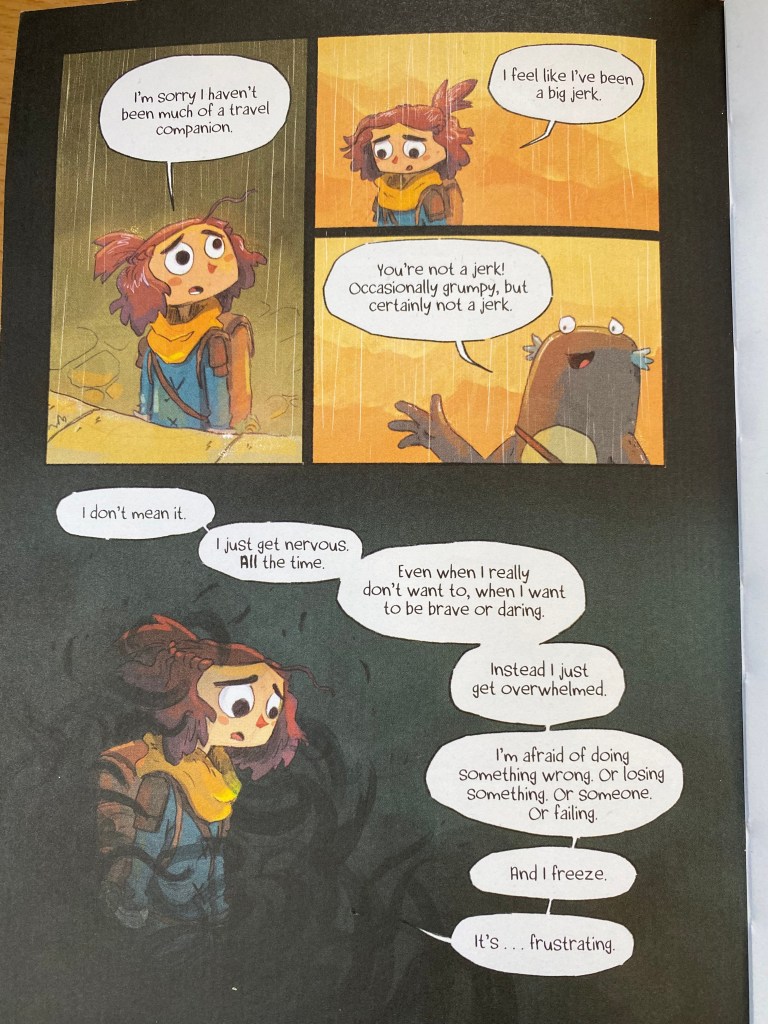
After studying the page, I thought the best option for stimulating the work would be to focus on the concept of bravery and how we perceive this trait. Each teacher was sent a rough lesson guide, full of questions. The main focus was on identifying bravery in everyday life, thinking about how we can be brave and who we consider to be brave. In my class, the children quickly identified that bravery had nothing to do with being big or strong. Instead, they felt it related to confronting your fears or pushing out of your comfort zone. When considering who they knew that represented these traits, nearly everybody chose a family member or friend. Being able to identify so many daily examples of bravery had a positive impact on the less confident pupils. As our discussion went on, more and more joined in or offered anecdotes of when they had witnessed bravery, some even started to realise that they were braver than they considered. It also gave us a good platform to talk about failing and how bravery can just involve trying something in the first place. Being able to point out that success wasn’t always a sign of bravery gave some a visible boost. In one class, a girl perfectly pointed out that Bea was “already being brave by talking about her problems” which is pointed out by Cad in the following pages.
Following this excellent discussion the children were given an open ended task that they would be able to adapt to their interpretation. Everyone was given the task of creating a comic strip that showed people being brave or confronting their anxiety. In year 5/6 we also looked at the idea of giving advice to people in difficult situations that might cause anxiety or that anxiety might stop them from joining in with.
Without hesitation, my class started thinking about how they could explore the broadest range of topics possible. I had pairs talking about ensuring they had different ethnicity in theirs and one set of girls even discussed body representation and how they wanted to draw characters of different sizes to make sure everyone felt represented. The only thing we discussed that might have inspired this was the idea of standing up for your beliefs, it was so pleasing to see the children taking this and absolutely running with it. They wanted to everyone to know they could be brave.
Along with this excellent discussion in year 6, I had several year 5 teachers coming to find me and inform me how much their children were loving the work. In one class a girl had been struggling all day with the fact she had made a wrong choice but was too embarrassed to admit it. After being present for the class discussion she felt inspired and admitted to her mistake. When she was asked why she had decided to finally confess, she explained that ” I didn’t want to but the lesson made me realise it was the right thing” which shows just how important it is to explore such rich and quality texts. Moments like this were something I never imagined would happen, but sometimes when we give children the chance to engage without always focusing on such a narrow objective or goal they can really surprise us. Days like this really allow the pupils to express themselves fully and show you how perceptive they are.
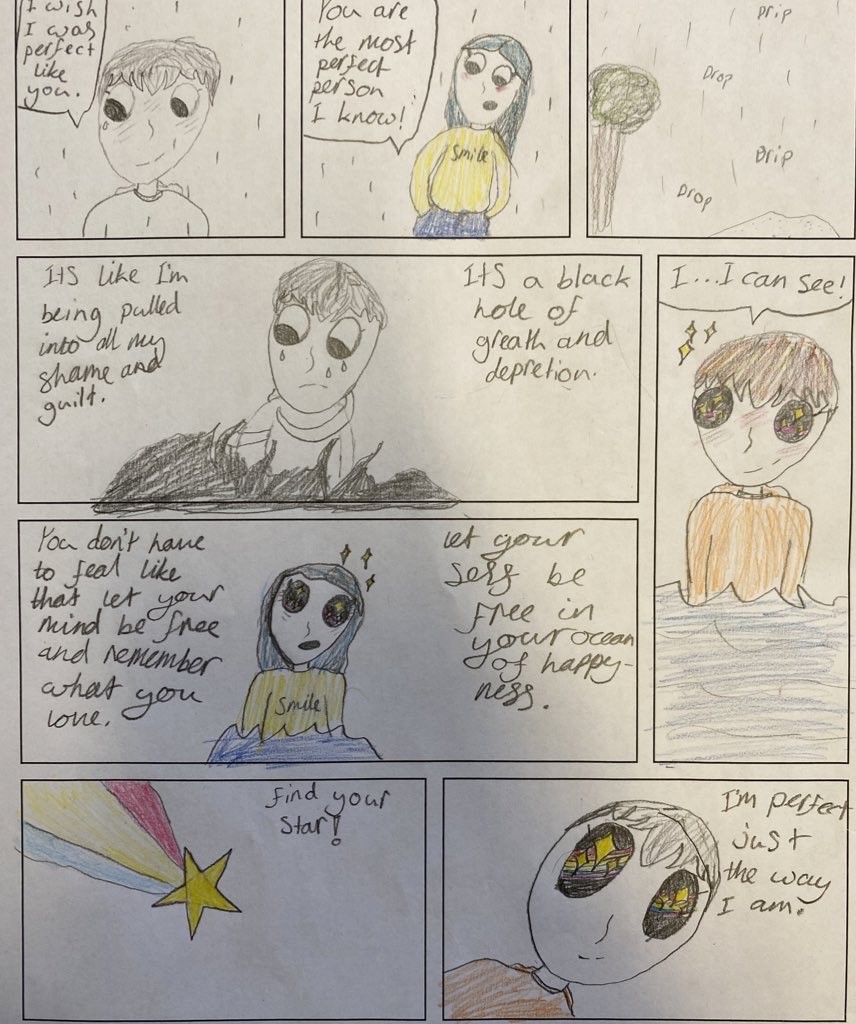
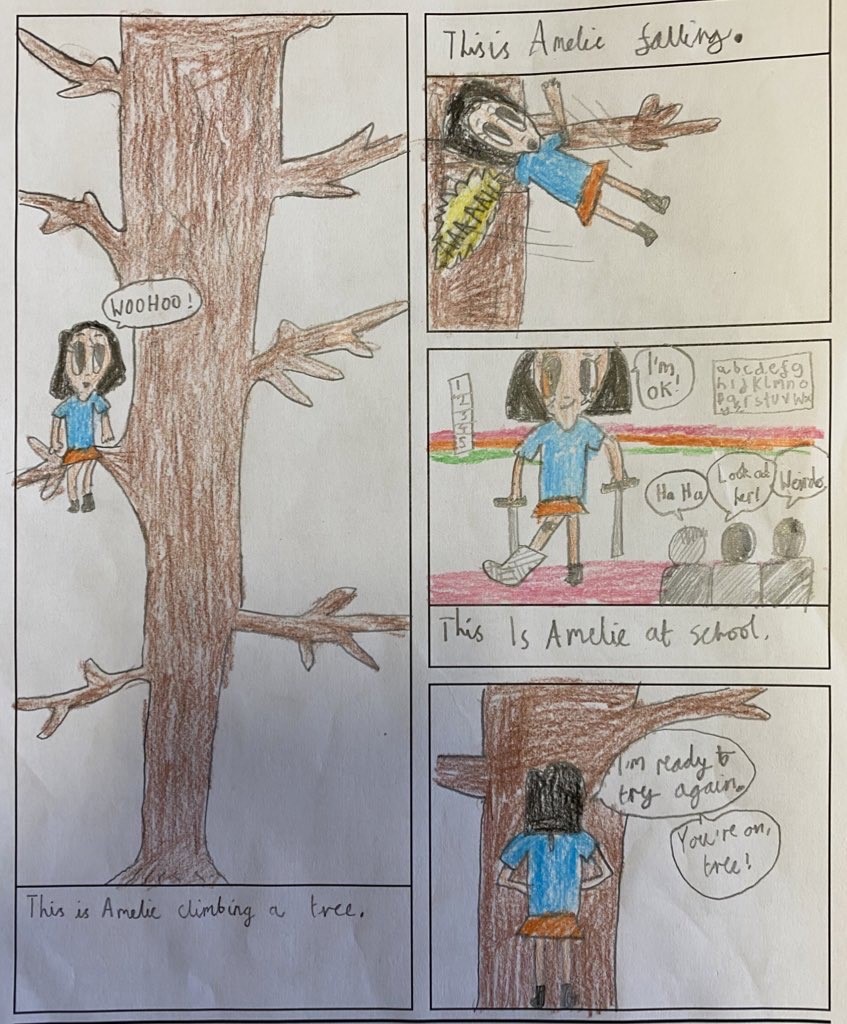
Some excellent examples of how to overcome your struggles from Y4 & 5.
After completing this task the teachers were given a wide range of other activities they could use to fill the day. However, a lot of them said their class were enjoying making their comics so much and desperate to make their work the very best it could be, so most classes barely finished because they had become so swept up with the work. Some classes managed to write some questions for Tim Probert, which we will send to him this week, while others watched some recommendation videos from members of the year 6 book club, including a brilliant top 5 graphic novels from an especially avid reader in my class. I had prepared a large range of resources to try and stop people running out of ideas but many of them were never used, due to the effort going into the comic strips. Some classes managed to find time to create a top 10 bravest characters in books, whilst others followed some drawing tutorials on The Phoenix Comic website or did a spot of book speed dating.
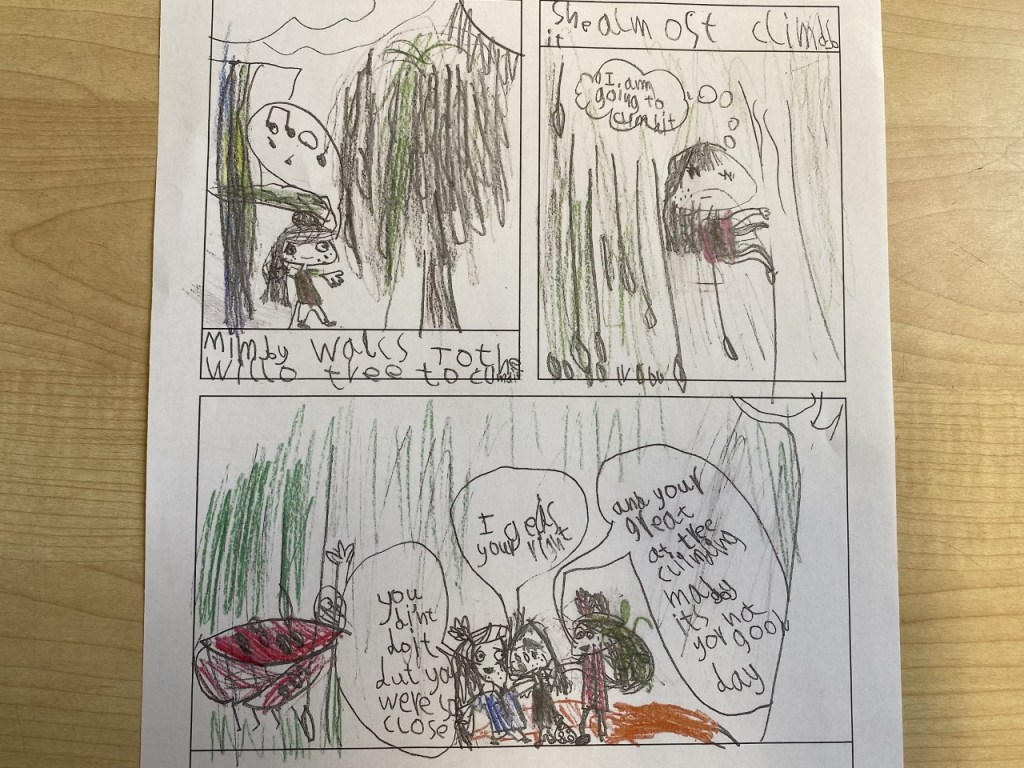
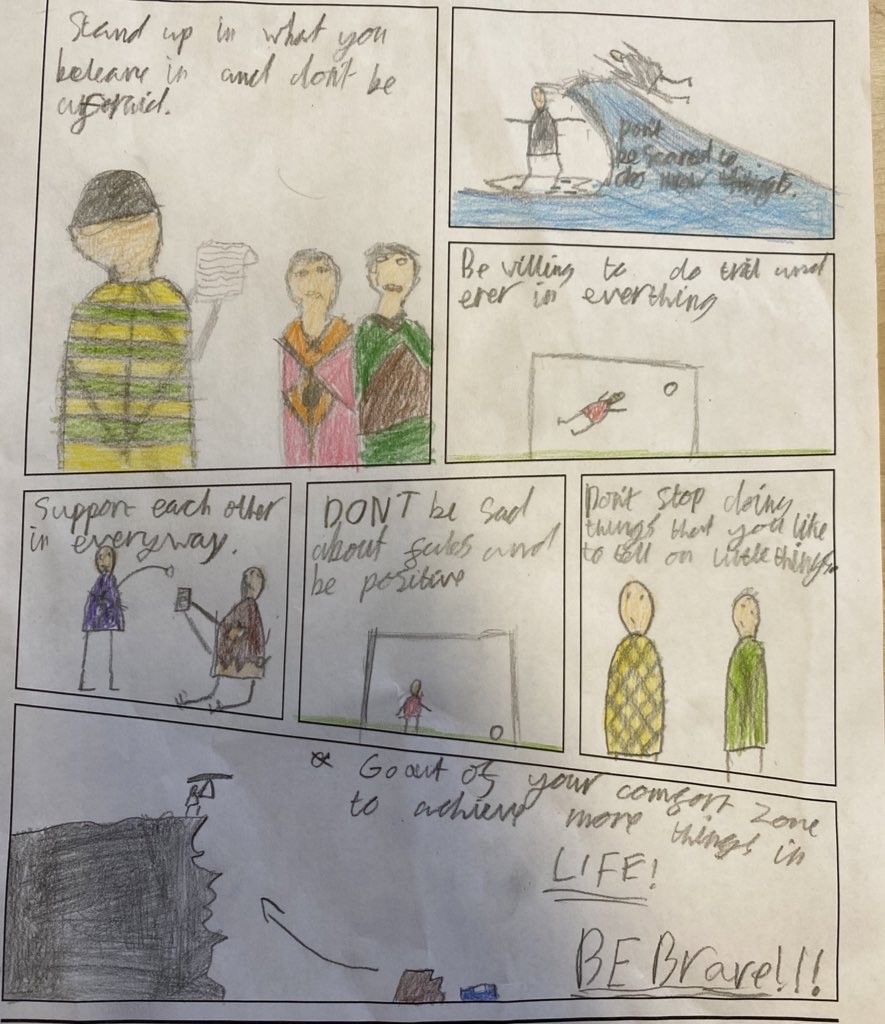
On the left is an excellent example of how to support each other completed by a Y3 child, on the right is a selection of wise advice from a Y6 boy in my class.
At the end of the day, there was a really positive buzz about the work and some classes were going to continue working on it the next day as the children had enjoyed it so much. Throughout the week, classes were taken to Waterstones to spend their book token and pleasingly on the Friday, several year four classes went in and basically cleared out the entire graphic novel section. In the future, we could easily do another day like this and use it to suit the appropriate occasion. You could use a range of text types, but it must be said, graphic novels work very well because you can adapt them so well to suit your skills. Children who love to write can focus more on the text, whereas those who prefer to express themselves through art can use their pictures to do the talking. Either way, the most important thing is children get the chance to talk about books and engage through quality texts instead of being rushed through various objectives to tick another box.
 They don't count as reading
Inspired! Love what you did for the school and also for kids at an individual level.
LikeLiked by 1 person
Thank you so much for your kind words, it was great fun to do I must admit.
LikeLiked by 1 person