In a bid to keep myself sane and carry on talking about all things graphic novel I’ve decided to write a few reviews. These are all based on books I’ve purchased and intend to use in my classroom when things return to a more normal state. None of them have been gifted to me so you can be assured what I say is my genuine opinion.
Donut the Destroyer is the latest book from Sarah Graley who has previously written Minecraft and Glitch. Glitch has been so popular in my school that I’ve had children from five or six different classes borrowing my copy and it’s been read so much in the last year that it will need replacing soon. You know how it is, the type of replacing that tells you the book has been loved byt hose who’ve read it rather than the replacing you do when someone spilt their water bottle on it.
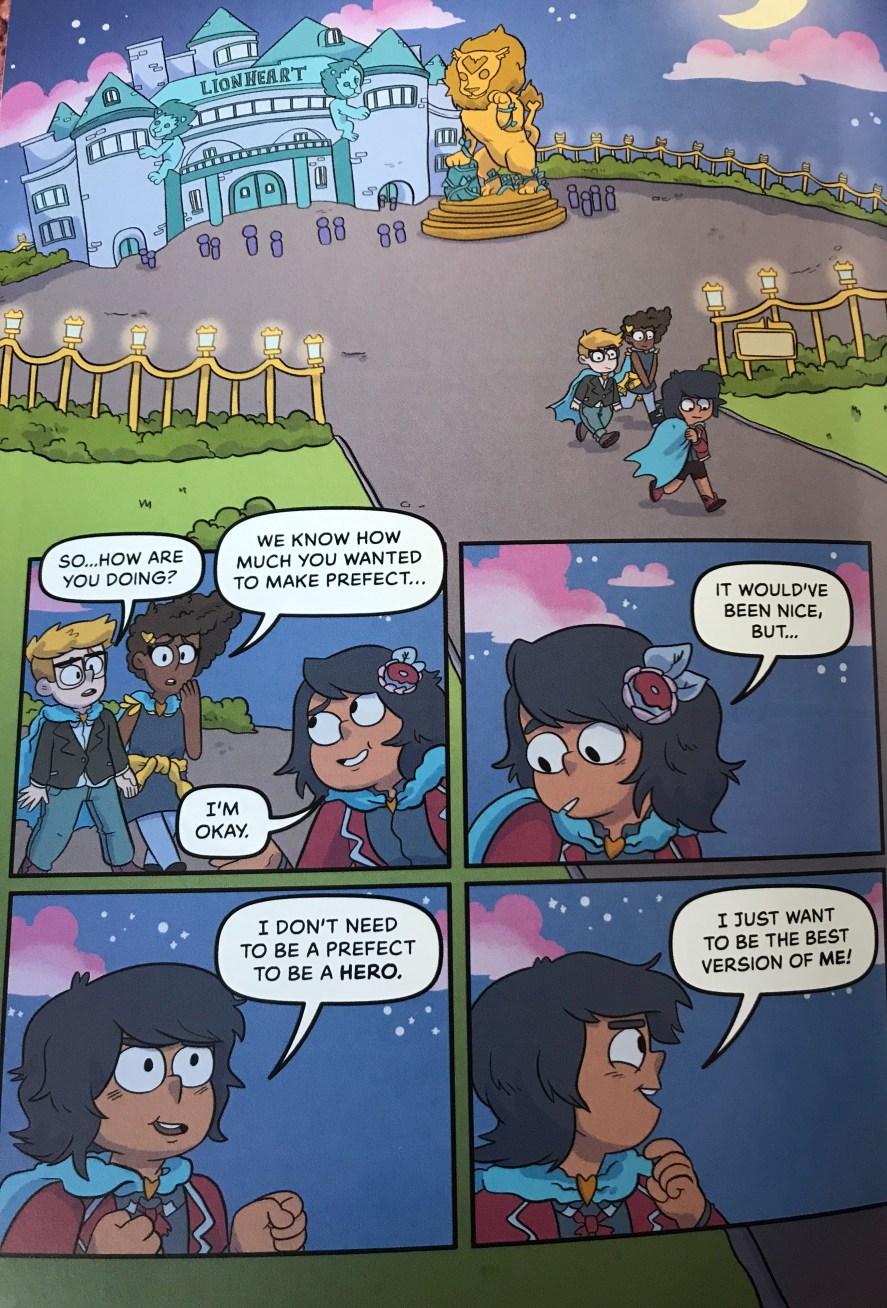
Donut the Destroyer (Dtd) is a story about a character called Donut who is a member of notoriously evil parents, has a best friend who’s evil and is expected to attend the evil Skullfire academy. Instead she follows her heart and attends the heroic Lionheart school. It is all about the choice and battle of good versus evil. However it deals with the topic in a very new and refreshing manner that will ensure readers not only have an action packed story to read but will be presented with examples throughout of how they can control their actions and choices.
Covering the choice between being good or being evil could have ended with lots of moral lectures or very bland story telling that just wanted to make sure readers got the point. Graley steers clear of this though and delivers scenarios that allow an engaging story to flow while also demonstrating how responsible we all are for our own behaviour. Donut should be evil, her parents are world famous villains yet at no point does she think it’s the right thing for her to do. She always follows her heart and tries to do what she thinks is right in a situation. She tries not to give into peer pressure, she chooses friends that respect her for who she is rather than changing her behaviour to fit in. Her desire to be a prefect shows aspiration and when things don’t go her way she picks herself up and tries again, there’s no room for her to give up or throw a tantrum just because she didn’t ger her own way. These lessons are vital for younger readers to engage with as they set a brilliant example for them to follow. As I read it I immediately thought of several members in my class who would either adore the story or would benefit from seeing a strong role model like this, who was willing to fight for what they believe in. A personality trait that is hugely important but can so easily be dismissed by people who simply claim someone is ‘easily led’ as if that makes it acceptable.
Clocking in at 189 pages and packed full of well written dialogue, Dtd will be a challenging read for year four children but one they should be capable of. Year five and six will devour this story and be begging for more I am sure of it. As an adult the book reminded me of The Good Place. I’m not suggesting at all that Graley copied the T.V series but I had the same feeling of inspiration when reading how she had managed to put her own spin on a very saturated topic. As the story progresses it would be easy to throw in cliches or follow tired character arcs but Graley ensures her characters stick to what they believe in and proves that you should always fight for what you believe in. After all we tell children to follow their heart so the books they read should definitely be preaching the same message.
If you teach in UKS2 I have no doubt this will be a hugely popular addition to your library and a title well worth investing in. Glitch was a well written story that I enjoyed but I would argue this is an even better read.





 They don't count as reading